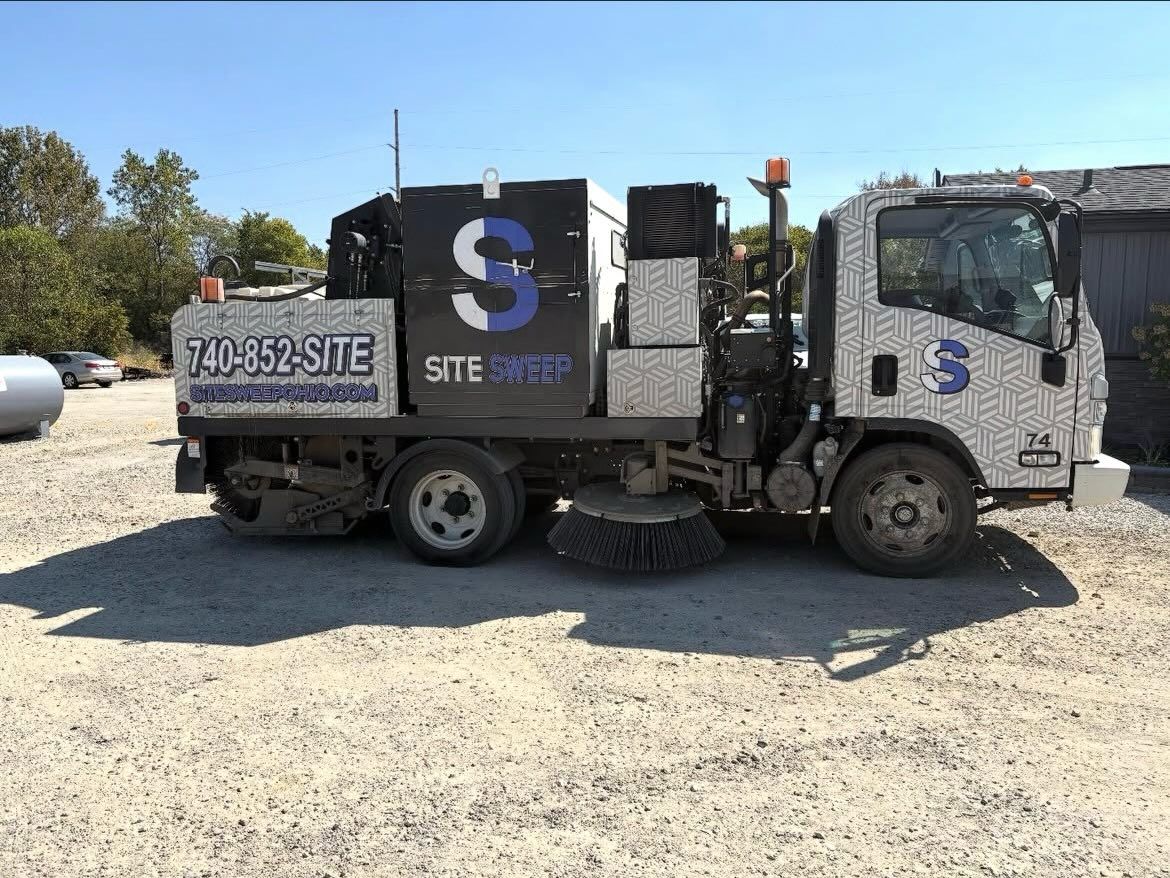
For us, it looks like someone reaching out about street sweeping, and somewhere along the way it comes out that their MS4 permit renewal is on the horizon and they are not entirely sure their records are in good shape, or can be located at all.
MS4 has probably come up in a permit renewal conversation you were having, or maybe it was mentioned in a meeting about stormwater management, or maybe someone handed you a stack of documentation requirements and MS4 was mentioned in the middle somewhere. However it landed on your radar, we highly recommend understanding it clearly because it affects your town and community in ways that are easy to “sweep under the rug”, at least until an auditor shows up.
Here is what MS4 actually means and why street sweeping is one of the most straightforward ways our communities across Ohio keep themselves in good standing.
What MS4 Actually Stands For
MS4 stands for Municipal Separate Storm Sewer System. In plain terms that is the network of pipes, ditches, catch basins, gutters, and curb lines that collect stormwater runoff from roads, parking lots, and other paved surfaces and channel it directly into local waterways without running it through a treatment plant first. When it rains in Circleville or Marysville or any other Ohio community, everything on the road including oil, sediment, debris, fertilizer, pet waste, road salt and more, goes wherever the storm drains take it. The cleanliness of our Ohio waterways is dependent on our towns and communities having plans in place to prevent contamination and pollution, and that is exactly the problem MS4 regulations exist to address.
Who Is Required to Have an MS4 Permit?
Ohio EPA regulates MS4s differently depending on population of the city or town. Large municipalities serving more than 250,000 people and medium municipalities serving between 100,000 and 250,000 operate under individual
NPDES permits. Smaller communities serving fewer than 100,000 people fall under what is called a Phase II Small MS4 general permit. MS4 regulations cover a very wide range of Ohio communities. They’re not just used for cities & townships, but counties, universities, and even transportation departments that operate stormwater infrastructure in or near urbanized areas. If your community has a storm sewer system and sits within or near a designated urbanized area, you probably already have an MS4 permit. And if you do, you hopefully know you also have ongoing compliance obligations that go well beyond just having the actual permit in your hand.
What Does My Permit Require for Compliance?
MS4 permits require communities to implement six minimum control measures, each of which requires documented best management practices, measurable goals, and records showing implementation. Documenting your intentions is not enough. Regulators will ask whether you followed through, whether you did enough of it, and whether you can actually prove it.
The six measures in the permit include educating your community on stormwater, giving residents a way to get involved, tracking down and stopping anything illegal from entering the storm drain system, controlling runoff from construction sites, managing stormwater from new development & construction, and making sure the municipality itself is not contributing to the problem through its own day to day operations.
The final measure that we just mentioned is where street sweeping comes in directly. This requirement instructs municipalities to develop and implement a program that prevents or reduces pollutant runoff from municipal operations, and that program must include municipal staff training on pollution prevention measures and techniques such as regular street sweeping, reduction in the use of pesticides or street salt, and frequent catch basin cleaning. Street sweeping is not just a suggestion in the context of MS4 compliance.. It is explicitly named as part of what a compliant municipal operations program looks like.
What Happens During an Audit?
The Ohio EPA and very occasionally the United States EPA conduct periodic inspections and audits to assess a city, town, or entity’s MS4 compliance with its NPDES permit. Audits cover all six minimum control measures including program administration and reporting. An audit may involve reviewing records, interviewing staff, inspecting municipal facilities, and observing MS4 inspectors or staff at work. MS4 audit documentation that regulators typically request includes a complete list of all catch basins and drainage structures with their last inspection dates, catch basin cleaning records, outfall screening logs, BMP inspection and maintenance records, street sweeping logs, and illicit discharge investigation and elimination records. Notice that street sweeping logs are specifically called out as something auditors look for. That means it is not enough to sweep your streets and show that they’re clean. You need to be able to actually show that you have swept them showing written records of when and where. A gap in your sweeping records is a gap in your compliance documentation, and unfortunately, gaps in documentation are one of the fastest ways a community ends up with a Notice of Violation.
Why is this so important for small Ohio communities?
Larger cities typically have dedicated stormwater staff, software systems, and resources to manage MS4 compliance as a full-time function. Smaller Ohio communities often do not. A village of 4,000 people or a township public works department covering a rural county does not always have the bandwidth to stay on top of sweeping schedules, maintain proper documentation, and keep up with permit renewal requirements all at the same time. Working with a reliable local sweeping contractor becomes more than just a convenience. Having a contractor who shows up on a consistent documented schedule gives your community a clear record of when sweeping happened and where. It removes one piece of the compliance puzzle from your to-do list and puts it in the hands of someone whose job is to show up and do the work.
So, Where Does This Leave Your Municipality?
As your local community sweepers, we know that audits are no fun, and we’re here to encourage you to take MS4 seriously. MS4 compliance is a legal obligation, not an optional program. For communities that are already managing it well, regular documented street sweeping is part of what keeps the audit process from being a stressful event. For communities that have let things slide, getting a consistent sweeping schedule in place is one of the most concrete steps toward getting the program back on track!
We work with municipalities and local governments across Central Ohio on both scheduled and on-demand event street sweeping. Make sure to check out our
Service Area to see if we cover your community, learn more about our
Street Sweeping Services here, or
Send Us a Message to talk through what a sweeping schedule looks like for your specific municipality.
And don't forget - MS4 auditors do not call ahead! Your street sweeping records should be the least of your worries when they show up.